
As many of you know – and are no doubt really excited for – next years begins the semiquincentennial of the Revolutionary War here in the United States. Or, for those of us who have trouble with a jawbreaker like that, the 250th anniversary.
Now, a bunch of you – not, not you of course, you’re cool – might be thinking, “Big deal, what does that have to do with the price of eggs in supermarkets (or whatever it is we’re worried about)?” My friends, this era has everything to do with the shape of our country and our modern-day political, social, and economic issues. Ever feel like our basic identity is as quibbling argumentative Americans who don’t agree on much? Both George Washington and George III would concur with that statement (giving this a rare 100% George stamp of approval). Feel like politics is mostly shouting and partisan backbiting? Hey, have you met Sam Adams and Patrick Henry? Confused as to whether Americans place more value in ideals and principals than the almighty dollar? Literally every single Continental Army commander asked the same thing. You get the idea.
But one of the problems we run into with this anniversary is that most people think they already know everything about the Revolutionary War. Which is itself problematic, as it is probably the most myth-ridden war in American memory – and yes, I can see that the War of 1812 and the War of the Rebellion are sitting right there, and I stand by my assertion. And it’s a pity, too, because the real history of the era is fascinating and exciting. The fact is, the Revolutionary War is incredibly complex. You can’t just do a quick summary read and understand the factors involved.
But we always try to simplify this era, to make it digestible, i.e., the Patriots were the good guys with rifles hiding behind the rocks and killing the dumb British marching in lines OR The Patriots were self-centered evil men who rebelled to protect slavery and take land from indigenous people. Making blanket statements like this erases the complexities of the people and the era, complexities in religion, politics, social class, economics, gender, and race.
So, with that in mind, I thought I’d try to do my part for general education and compile a reading list. This list comes with two very important clarifications. One, I am only including books I have actually read. Second, I am also further restricting the list to books of interest to general readers. So if you’re like, “Hey ASO, why is With Zeal and Bayonets Only not on your list?” I will respond that books in my to-read pile don’t make the cut. I gotta be an honest broker; if I haven’t read the book, why should I expect you to? Adherents of the era might notice some missing works, such as Washington’s Crossing, to which I’d say that there are some books that I can’t quite recommend to new readers who aren’t able to pick out some of the fallacies. Similarly, I have left out some niche works – again, this is for readers new to the era. Also, no biographies. Ain’t nobody got time for any “great men of history” theories.
You’ll also notice in the title that I have limited this to a certain time period. Yes, the Revolution lasted for eight long years, so I’ve got some time to add reading lists for the future. Without further ado, here is my reading list for those who want to dive into the fascinating and complex era of the American Revolution.
General Overall Interest
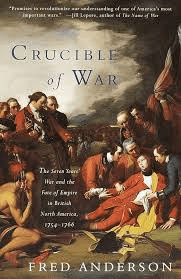
Crucible of War: The Seven Years’ War and the Fate of Empire in British North America, 1754-1766
OR
The War That Made America: A Short History of the French and Indian War
Fred Anderson
Ok, this is my colonial American background talking, but in my humble opinion it is impossible to understand the Revolutionary era without looking back at the formative Seven Years’ War in North America, commonly referred to as the French and Indian War. Nothing that happens from 1775-1783 makes sense without understand the relationship of the colonies with the mother country, with Native nations, with European powers, with each other, etc. Crucible of War is the definitive work for those interested in learning about America’s place in the first global war. Downside, it’s a pretty hefty tome that can be used as a weapon, if needed. For those pressed for time, The War that Made America is shorter and more digestible. The choice is yours, young padawan.

Rick Atkinson, The British Are Coming: The War for America, Lexington to Princeton, 1775-1777
If you’re looking for a single volume to understand the lead-up to the Revolution and how it played out from 1775-1777, look no further than the best non-Army army historian, Rick by-god Atkinson. Although I have a few minor quibbles – what historians don’t have minor quibbles – it is the best, most readable, comprehensive look at the early years of the Revolution. As usual, Atkinson is meticulous in his research and manages to provide a plethora of perspectives. Great for looking at the conduct of the war from Canada to South Carolina.

Holly Mayer, Congress’s Own: A Canadian Regiment, the Continental Army, and American Union
Hey, remember when I said I wasn’t going to recommend niche topics? This looks niche, but in fact contains a wealth of general information on the Revolution from one of its foremost scholars. Did you know Canada provided two regiments to the Continental Army? Want to know more? Then read this book. It not only discusses niche information like force structure, but gets into larger issues of American identity, fascinating personas, and the relationship of colonies. And even though it breaks my other rule, of not recommending books I haven’t read, having skimmed her other work, Belonging to the Army: Camp Followers and Community During the American Revolution, I have to add it to this list. This work demonstrates that camp followers formed an integral part of the Continental Army’s logistics system and helps us further understand the vital role of women in the war.

Friederike Baer, Hessians: German Soldiers in the American Revolutionary War
One of the many bugbears out there for historians of the Revolution is that any German soldier showing up for the war gets automatically labelled as a Hessian. This work breaks down just who these German soldiers were, where they came from, the politics that brought them to America from a variety of German states, their war experiences, and the mark they left on the United States in memory and reality.

John U. Rees, ‘They Were Good Soldiers;’ African-Americans Serving in the Continental Army, 1775-1783
One of the most fascinating aspects of the Continental Army is that it was the most integrated and diverse U.S. Army that we would see until the Korean War. There is still much work to be done on this topic, but Rees does an excellent job using muster rolls and pension requests to show the extent of Black service. He also goes colony-by-colony, breaking a lot of stereotypes along the way. Many know of the 1st Rhode Island as the regiment with the highest concentration of people of color, but Rees shows us that in other units, one in every five to ten soldiers was Black, helping us change the way we visualize who was fighting, and why.
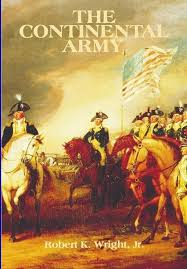
Robert K. Wright, The Continental Army
For anyone looking at understanding the ins and outs of the massively confusing but almost always overly simplified Continental Army, this is the book for you. Most people do not understand the miracle of forming an army out of representatives of all the colonies. Attempts at it in the past had failed miserably. As the first truly national experiment – forging 13 abrasive colonies into one entity – the success or failure of the Continental Army presaged the success or failure of the nation. No single work details the monumental struggle of forming, manning, training, and equipping this army than does Wright’s work. And hey, it’s free from the Army Center of Military History. Who doesn’t love free stuff?
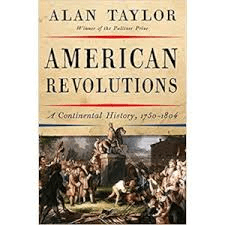
Alan Taylor, American Revolutions: A Continental History, 1750-1804
First off, if you haven’t read Alan Taylor before, you’re in for a treat (and maybe go read American Colonies before reading this). Taylor looks at the concept of a revolution holistically. In doing so, he encompasses the individual colonies, Native nations, a growing Canadian identity, gender, and race. It’s a marvelous perspective of the conflict and era that simply adds to the overall complexity. What, you thought this reading list was about making things simple?

Wayne Lee, Cutting Off Way of War: Indigenous Warfare in Eastern North America, 1500-1800
Personally, one of my greatest frustrations when reading about warfare in this era is when a historian states that American Indians were very successful at raiding but had no actual way of war, and then moves on to talk about European tactics ad nauseam. Lee swats that old trope aside in this outstanding new work, showing that not only was there an indigenous way of war, but it was carried out at the tactical, operational, and strategic levels. We love myth-busting, and this is one of the best myth-busters to come out for a long time.

Joseph Plumb Martin, A Narrative of Some of the Adventures, Dangers, and Sufferings of a Revolutionary Soldier
What better way to learn about the Continental Army than from one of the few surviving accounts from the OG Godfather of the E-4 Mafia. Martin’s account is unsullied by the romanticism which plagued so many accounts published in the 19th century, and includes the good, the bad, and the absolutely ridiculous – like when he moons the British while under fire, demonstrating that war, war never changes. Martin’s account is notable, too, in that he served from 1775 to the conclusion of the war. Sure, half of it is talking about how hungry he is all the time, but that’s army life for you.
1775

Robert A. Gross, The Minutemen and Their World
Another perennial issue in the mythos of the Revolution is the fundamental misunderstanding and mischaracterization of those elusive individuals, the minute men. Gross dives right into this, with a social history of the Massachusetts towns and counties which formed the ideologies these young men embodied. From demographics to religion, Gross aims to take much of the mystery away from these fascinating characters, and in doing so renders them even more interesting. Readers will come away with a much better understanding of how it’s just not a good idea to tick off New Englanders when they have been imbibing Great Awakening religious fervor from a firehose AND possess a militia structure that could field an army of 20,000 in about 24 hours. Just don’t do it, man. Ask Thomas Gage, he knows.

John R. Galvin, The Minute Men: the First Fight: Myths and Realities of the American Revolution
For a look at how Massachusetts was uniquely capable of forming a field army out of seemingly thin air – something no other colony could replicate and which has caused no end of problems in American memory – Galvin’s book is the way to go. In it, he describes the martial background of Massachusetts and how civil authorities built a military structure that was unrivalled throughout the colonies. He details the actions at Lexington and Concord, and the bloody fighting all the way back to Boston on 19 April. In doing so, his dispels many of the myths of the untrained farmer who picked up their musket and followed the sounds of the guns. Instead, he shows that an intricate network of experience, training, ideology, and leadership was able to bring force to bear in a way the British never suspected. These units formed the backbone of the New England Army of Observation, which on 14 June would become the Continental Army.

Nathaniel Philbrick, Bunker Hill: A City, A Siege, A Revolution
Oh, you thought we were done with New England content? Not on your life. This book helps give additional context to the crucial role Boston played in forming revolutionary ideology. Of particular note is how Philbrick highlights the role of Joseph Warren, who might have been a contender for high levels of Continental Army leadership had he not been…well, I don’t want to spoil it for you, but it doesn’t end well for him. Bunker Hill came as a double shock for the British after Lexington and Concord, who ended up with a shocking butcher’s bill and a good quarter of its officer corps in North America on the casualty list. It dispelled ideas of a quick war and shaped British strategy for the remainder of the conflict (in the words of a contender for the American presidency, “Never fight uphill, me boys.”)
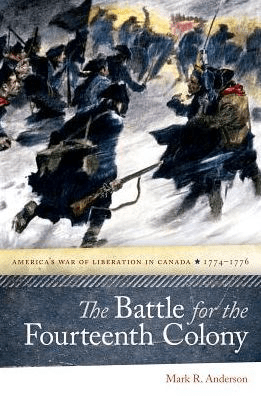
Mark R. Anderson, The Battle for the Fourteenth Colony: America’s War of Liberation in Canada, 1774-1776
I don’t think most Americans understand just how many times we’ve tried to get Canada (to Canadians: sorry about that). The U.S. Army’s very first offensive was into Canada in 1775. It didn’t go great. Anderson’s work gets into the political, social, class, and religious issues at work in Canada at this time and how the Continental leaders tried to win Quebec over to the cause of Revolution – and got pretty close. More than a military history, this work also examines the idea of what it was to be “American” in this era, and how forging the identities we take for granted today was not a foregone conclusion.
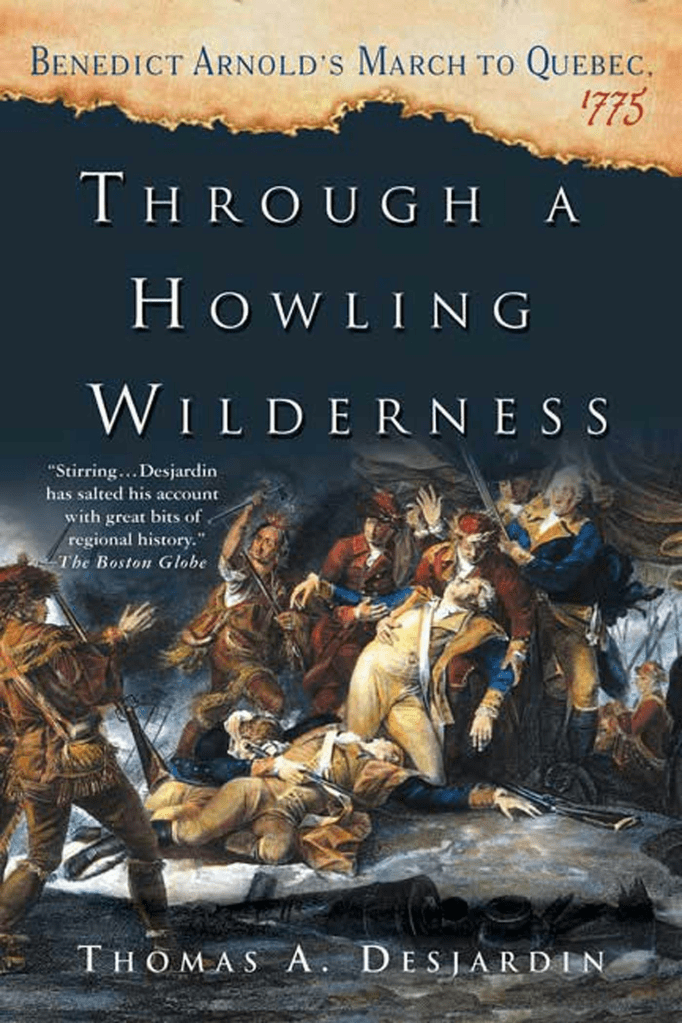
Thomas Desjardin, Through a Howling Wilderness: Benedict Arnold’s March to Quebec, 1775-1777
If you’re looking for a gripping adventure story, this is it. Benedict Arnold is still years away from doing a treason and leads 1,200 troops through the backwoods of Maine, with such notable sidekicks as Aaron Burr, Daniel Morgan, and Henry Dearborn. This is essentially a story of survival, how maps don’t always reflect reality, and that yes, you could eat your own shoes back then. Not sure if modern footwear is as “invasion of Canada via the wilderness with few supplies” friendly. Arnold’s march up the Kennebec River and to the gates of Quebec is truly one of the most amazing feats of the war. How it turned out in the end, well, you’ll just have to read it.
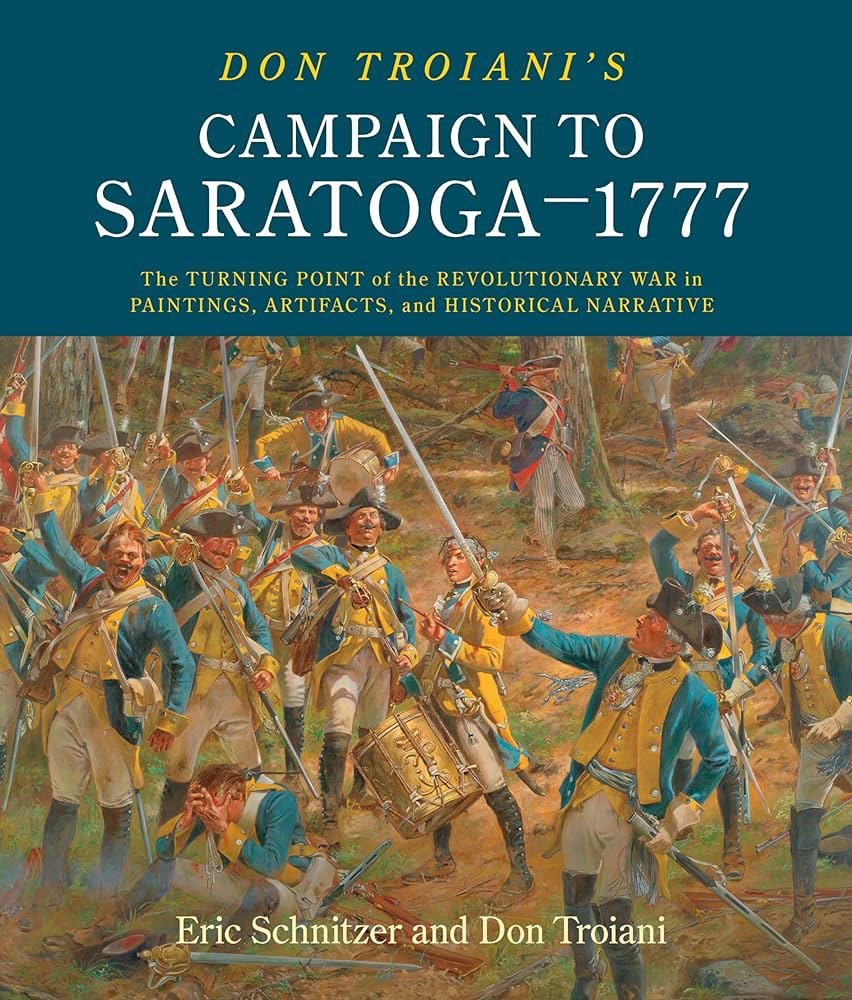
Eric Schnitzer and Don Troiani, Don Troiani’s Campaign to Saratoga—1777: The Turning Point of the Revolutionary War in Paintings, Artifacts, and Historical Narrative
You might be forgiven for overlooking this one, because it’s got the appearance of a Barnes and Noble coffee table book. In fact, it’s one of the best histories out there on the campaigns of the Northern Theater resulting in the victory at Saratoga. Eric Schnitzer, park ranger at Saratoga, is one of the preeminent Saratoga campaign historians and uses a wealth of primary sources for this work, which takes readers from the failed (sorry, spoilers) invasion of Canada in 1775 to eventual victory at Saratoga in 1777. He dispels a lot of myths along the way – myths which continue to be propagated to this day by other historians who shall remain nameless here. His narrative is paired with Don Troiani’s exceptional art and absolutely insane artifact collection. Great for those who want to get familiar with one of the most crucial theaters of the war, along one of North America’s key strategic corridors. Or, if you like pictures.
War and Memory
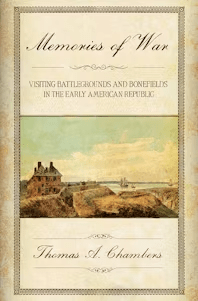
Thomas Chambers, Memories of War: Visiting Battlegrounds and Bonefields in the Early American Republic
Hey, I’m a sucker for war and memory, what can I say. As we look at the legacy of the Revolution 250 years on, Chambers’ work helps us see how our memory of it has been shaped and even warped to meet the ideological needs of past societies. In addition to the Revolution, he also includes the French and Indian War and the War of 1812. He gets in some very cool details, such as Pennsylvania troops posted to Fort Pitt during the Revolution who go on a day trip to visit the site of Braddock’s defeat. They use this site of a massive British disaster from the last war to confirm their existing belief in the incompetence of British leadership and the superiority of colonial leaders. Chambers also discusses the use of memory and place in the development of Southern nationalism in the decades prior to the Civil War. Advocates for a growing Southern nationalism attempted to take minor military actions in the South prior to 1778 and place them on the same level as Bunker Hill. This helps explain why you’ve seen very few books on this reading list related to the Southern theater of war in 1775-1776 – there simply was nothing to compare with the actions in the Northern theater (minus Charleston, 1776). Atkinson covers the Southern theater in enough detail to satisfy the curious. The Confederacy tried to take up the mantle of the Revolution in 1861 and attempted to erase Northerners’ roles, going so far as to cut down a monument at Yorktown when U.S. troops invaded in 1862. The changing views of the meaning of the war help inform our perspective as we move towards the 250th.
I’d be remiss if I didn’t give an honorable mention to Alexis Coe’s phenomenal biography of George Washington, entitled You Never Forget Your First. Yes, I know I said no bios, but I’m a rule-breaker, what can I say, I like to live dangerously. While not a book on the Revolution per se, it is a refreshing look at a man who came to personify the war probably more than any other person.
This concludes my list, for the moment. Additional lists will follow as the years go by and as my to-read pile shifts to my good-lord-I-need-more-bookshelves pile.
This is the first in a series of posts on the 250th anniversary of the Revolutionary War as we go through the commemorative years, 2024-2033. If you would like to contribute to the 250th conversation, please send submissions to angrystaffofficer@gmail.com
Enjoy what you’ve just read? Please share on social media using the buttons below.
Views expressed in this piece are the author’s own and do not reflect those of the U.S. Army or Department of Defense.
Cover image courtesy OpenVerse

 The Angry Staff Officer
You must be logged in to post a comment.