

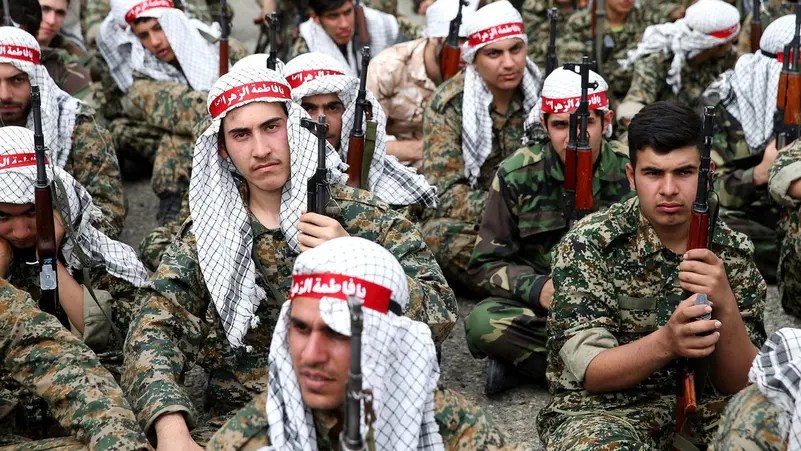
(pro-government militias)
While most regimes and governments rely on traditional bases of power – democratic legitimacy, hereditary monarchy, etc. – all rely to some extent on the potential for violence to keep their authority intact. Regimes employ a variety of military and police forces for external defense and internal order/repression. In some countries these various government forces are intentionally placed in tension with each other to prevent any one of them from threatening the regime itself. Each provides the regime with different political and operational capabilities for different internal and external mission sets, as well as different optics as to how the accomplishment of those missions is perceived by internal and external stakeholders.
Across the globe in recent history, there have been situations where those in power benefit from having a semi-lawful paramilitary group, willing to do their bidding while maintaining some degree of plausible deniability that comes from their not being part of the identifiable and official mechanisms of government. A prosaic example of the exercise of irregular force and plausibly deniable power that that comes to mind are the local, ununiformed guards that the People’s Republic of China was widely reported to use to isolate dissidents in an extra-legal form of home arrest; those breaching the social quarantine around such dissidents are met with beatings and physical intimidation, not arrest.
What does this look like in the paramilitary context? Let us examine a few historical examples of the rise and operation of more organized irregular paramilitary groups across different places and times. In so doing we may come to some conclusions about the conditions that allow such groups to form and operate, as well as how they interact with the formal organs of government authority.
Iran and the Basij. The Organization for the Mobilization of the Oppressed is an armed “youth” organization manned by volunteers. The Basij operates (uneasily) under the purview of the Islamic Revolutionary Guards Corps (IRGC), an organization that itself exists outside Iran’s traditional military structure. Many of the volunteers are from poor, conservative backgrounds and benefit from material perks associated with membership (subsidized education, consumer goods, health care).
The Basij operates with a modest budget, but is also an actor in the Iranian economy, operating investment companies and other investment vehicles. It exists as an auxiliary force with current a focus on internal security. Following the disputed 2009 elections, Iran’s Supreme Leader mobilized the the Basij to counter perceived threats to the regime, mostly student protests. Earlier, the Basij assisted ethnic separatists in remote regions. After the 1980 invasion by Saddam Hussein’s Iraq, Basijis were deployed alongside regular military forces, often as cannon fodder in human wave attacks; children were utilized in the war effort and in suicide attacks. The focus of the Basij shifted back to internal repression of student protests in 1999, and they were increasingly used after the 2005 election of President Ahmadinejad. The conduct both uniformed and plainclothes (infiltration) operations in their domestic role. In suppressing protests, they typically resort to batons and whips, but sometimes also firearms.
As might be expected, the performance of this lighty-trained element has been inconsistent. Basijis appeared unable to comprehensively quell protests after their mobilization in the aftermath of the 2009 elections, with local members being unwilling to beat up neighbors and fellow students and abandoning anti-protest assignments; units from different locales were brought in as reinforcements. The Basij’s performance was especially problematic in major urban centers; they had greater success in the provinces; provincial and urban Basij forces have differences in training and capabilities.
The Basij had also been employed in a training role in Syria as a component of Iran’s support for the previous Syrian regime.
The Basij is recognized in the current Iranian constitution as the people’s militia, reflecting the Constitution’s dictate to provide a program of military training to all citizens. The force is divided into three main branches, one for defending neighborhoods in times of crisis, one comprised of war veterans who integrate more closely with IRGC ground forces, and one specializing in security threats. They also have specialized constituency-based sections for students, tribal nomads, union members, civil servants, etc. that act as a counterweight to non-government organizations in these areas (labor unions, etc.). They also have a role in combatting perceived threats to the regime on-line, with members trained and engaged in on-line activities.
Zimbabwe’s “war veterans” (ZNLWVA). Formed in 1989 by disgruntled former fighters who opposed the colonial power during the Rhodesian Bush War (1964-1979), its members were originally promised land expropriated from the country’s white minority. Significant land reform having failed, and after a period of potential conflict caused by the scant attention paid to the material needs of demobilized fighters, they are now funded by the country’s ruling party, ZANU-PF. From 2000-2009, ZNLWVA led armed invasions of white-owned farms with the tacit approval of the government; the killings and violence that ensued did not generate a robust police response and were carried out by many who were too young to have actually participated in the country’s struggle for independence. The ruling party also used the group to suppress dissent through harassment, intimidation, and violence.
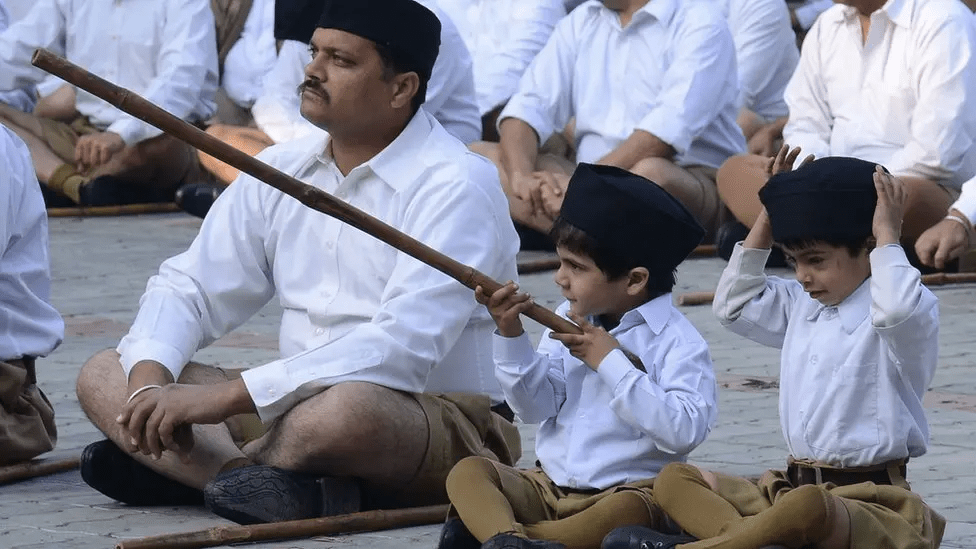
Rashtriya Swayamsevak Sangh (RSS) in India. A Hindu nationalist organization that pre-dates the country’s independence, the RSS was occasionally banned under governments of Gandhi and Nehru’s Congress party for involvement in intercommunal (anti-Muslim) violence, but has close ties to the currently ruling Bharatiya Janata Party (BJP); the current prime minister is a lifelong member, as are many in his cabinet. At 5 million members, it is the largest volunteer group in the world.
It aims to nourish Hindu culture and be a moral force, but also emphasizes preparedness and military-style drills. The organization has a unified national leadership and regional and local branches, as well as specialized trade union, student, and women’s chapters. The RSS has links to white supremacist organizations in the West and echoes their calls for racial purity in rhetoric designed to permanently exclude Muslims from India. The group’s founder—from which the modern group nominally distances itself—spoke in glowing terms of Nazi race pride as an example to be followed. Cadre and members have been involved in anti-Muslim rioting, resulting in deaths. Gandhi’s assassin was a member, although the group was later cleared from any responsibility for Gandhi’s death.
Nevertheless, the RSS opposes Gandhi’s notion of a secular India. It came to modern prominence when it called for the destruction of a mosque built on the site of the god Ram’s birthplace in Ayodhya. The mosque was destroyed by Hindu activists in 1992, thousands of mostly Muslim Indians were killed in the riots that followed. In 2024, prime minister Modi opened the sprawling Ram Temple that now stands on the spot. Communal violence against Muslims continued with a certain degree of official impunity in the interim period (with the worst anti-Muslim occurring in Gujarat in 2002 with over 1,000 deaths) and to this day.
With the rise of the BJP in Indian politics, the RSS now enjoys great influence in national policies.
Sons of Iraq. The SOI were a 2007 coalition between Sunni tribal leaders and former Saddam-era Iraqi military officers sidelined during de-Ba’athification, acting against al Qaida and anti-regime insurgents in conjunction with the occupying U.S. forces. Financed by the U.S., these security forces were initially established in Ramadi, but later spread to two thirds of Iraqi provinces. Training for the group was paired with guarantees of future employment for mostly Sunni members with the (Shia dominated) Iraqi government.
In 2009 responsibility for salary payments transitioned to the Iraqi government. The brutal treatment of Sunnis by al Qaida in Iraq helped make collaborating with American coalition forces—forces that had previously installed an Iraqi government unpalatable to Sunnis—appear as an acceptable option. The Americans, for their part, had lost their commitment to de-Ba’athification in the intervening years and saw the Sunni tribesmen and former military officers as an effective force against al Qaida.
In the short term, the program succeeded in bringing down attacks. However, it could not overcome longstanding communal antipathy between Sunni and Shia. The program was gradually dismantled between 2009 and 2013. Culminating with a return to sectarian violence when hundreds of Sunni were killed in clashes with Iraqi security forces in Hawija in 2013.
Sturmabteilung (SA). This paramilitary organization, recruiting Germans who had lost their jobs and were looking for a restored sense of personal pride, was associated with the German Nazi party since before it came it power. The organization was purged by Hitler in 1934, its leadership being executed and the force losing most of its power to the Schutzstaffel (SS). The SA was relegated to a training role for the balance of the war until it was officially disbanded in 1945.
Founded in 1921, from the remains of the Freikorps “independent paramilitary units” (German WWI veterans who fought against communists and other groups in street brawls), the SA provided military protection for the Nazi party and interfered with the functioning of opposing political parties. The SA was involved in the failed Munich Beer Hall putch on November 9, 1923, as a result of which was the banning of the SA by the then-German government. The SA was re-established in early 1925. In 1930, it had 60,000 members. In 1934, when Hitler was in power, it claimed 4 million and became an official government organization (this was at a time when the German army was itself limited by the Treaty of Versailles to just 100,000 men). The SA had local subdivisions as well as functional specialty units (engineer, cavalary, communications, and medical units).
The SA not only physically assaulted political opponents, but engaged in voter intimidation in national and local elections. It undertook street violence against Jewish Germans. They were known for their crude brutality and terror.
Ku Klux Klan (KKK). In the United States, the most notable historical example is the Ku Klux Klan. Its membership included white Southerners from all classes of society.
During Reconstruction, a number of violent, armed groups sprung up in the South to resist U.S. Army occupation, destroy the Black franchise, and terrorize White unionists. Among these were the White Shirts, the Red Shirts, and the KKK – as well as a number of paramilitary groups referred to as “rifle clubs.” These groups of mostly former Confederate veterans used physical intimidation, threats of violence, and brutal attacks to undermine the rule of law. In some cases after Reconstruction, “rifle clubs” became the state militia as state governments were “redeemed” by white supremacists – that is, all Black legislators and their allies purged from government.

Although not supportive of the federal government at the time of its formation by Confederate veterans in the aftermath of our Civil War (1865), the KKK supported the remaining socio-economic power structure in the former Confederate States. The goal of the KKK was to use violence and terror against African Americans who had benefited from Reconstruction in the American South. Thousands of Black Americans were killed in a campaign of voter intimidation connected to the 1868 Presidential election. President U.S. Grant used Army forces to largely break up the Klan in the late 1860s, although the ringleaders were never captured. Federal attempts to legislatively empower the government to act against the Klan in the Ku Klux Klan Act were rebuffed by the Supreme Court in 1882, although the organization was almost non-existent by that time, as the political supremacy of white Southerners had already been firmly re-established.
The Klan was revived in 1915 Atlanta partly on the basis of romantic nostalgia for the Old South, now expanding its remit to target Jewish and Catholic immigrants alongside African-Americans. It also broke the bounds of the traditional South, gaining power in Western and Northern states, to include New England. The group engaged in “hangings, floggings, mutilations, tarring and featherings, kidnappings, brandings by acid, along with a new intimidation tactic, cross-burnings” as well as organized attempts to subvert the judicial process. It had approximately 4 million members by 1925 and was integrated into the governing structures in states where it operated. A series of scandals subsequently reduced the group’s influence. The last remnants of the group disbanded in 1944.
The Klan was again reanimated in opposition to the 1960s civil rights movement. Mississippi was the epicenter of violent Klan activity. The Klan eventually merged with Neo-Nazi movements into modern white supremacist organizations. Judicial actions helped close KKK training camps and hurt the group’s finances. Remnants of the group are, however, still active today.
Contemporary United States. By way of background, readers should recall that the military forces of the United States are divided up into a lot of different slices. There is the active component (currently authorized at around 1.34 million personnel, with 473,000 being the Army), a reserve component, with each service having a federal reserve of fully trained and ready manpower they can call upon as individuals or in units. There is an Air and Army National Guard—basically additional reserve forces trained to federal standards and largely paid for by the federal government and hidden within the States (for example, the Army National Guard contains 50% of the Army’s combat forces even though it is held to a fraction of the size of the Army’s active component). There is also an “individual ready reserve” that consists of previously trained manpower in various states of readiness. Similarly, a “retired reserve” of individuals who have retired from service but may be called upon to undertake certain functions as need.
In between the paid and organized professional police forces, to include paramilitary forces such as the various state police/highway patrols and federal law enforcement agencies (the Coast Guard, a federal law enforcement agency that is given over to the U.S. Navy in times of war is a bit of special case and need not be discussed here), on the one hand, and average members of the public, on the other, the states also have the legal authority to maintain “state defense forces.” In the author’s experience such states as do maintain them place very limited funding behind them and as such they largely consist of volunteers in support roles and not combat formations. Florida’s recent efforts may be somewhat of an exception. In addition to these categories of more or less ready military manpower there exist also various mobilization categories that extend across the rest of the population, notably the unorganized militia of the United States (defined to include all able-bodied males at least 17 years of age and under 45 years of age who are, or who have made a declaration of intention to become, citizens of the United States). The political aversion to relying on involuntary mobilization—conscripts—is well understood and need not be re-explained here.
There is a variety of ways in which these various military components can be used within the United States. Some of the legal modalities for their use are poorly understood. The domestic use of military forces always threatens political consequences.
Might the organizations behind the January 6, 2021 Capitol riots (Proud Boys and Oath Keepers)—especially now that their leaders and participating members have been released from the judicially-imposed punishments from their actions—be the basis upon which regime-supporting irregular paramilitary forces might be maintained within the United States? Commentators have speculated that the purpose of the recent pardons was precisely to “encourage vigilantes and militias loyal to the president, but unaccountable to the government” in line with the practices, explored above, experienced in illiberal regimes. Impunity in regard to the commission of (sometimes violent) crimes does seem like an incentive that would embolden irregular groups to continue activities in support of their political patron. This could be especially pernicious when combined with the removal of government protection from those who may now be perceived as regime opponents and whose work has been the subject of negative scrutiny by domestic groups. Further, efforts to quantify the extent to which there may be overlap between military members and such groups look to be on the verge of being abandoned. Potential prosecutions under state law by state governments not aligned with the federal administration would, of course, complicate the incentive structure favoring such groups’ operations.
The expanded operation of such pro-government paramilitary groups in modern America is obviously a disturbing prospect. But with a military full of senior cadre who cut their teeth on the study of counter-insurgency tactics, the American military has at least a baseline understanding of irregular forces and possesses an operational paradigm through which they may be understood. From our survey, above, we can at least articulate the factors that these regime-friendly paramilitary groups share. They have been used by political actors as a mechanism for leveraging un- or under-employed manpower for crude, undisciplined, and relatively un-coordinated intimidation efforts aimed at civil society groups. The groups may be organized down to the local level and/or along functional constituencies. The organization of such groups exploits ethnic or communal tensions where possible. They typically require limited external resources to incentivize membership and to operate. These resources seem modest in comparison with the resource requirements of regular forces. Former military members often have the experience and skills to form the backbone of such organizations.
And, once tolerated, their activities spread.
About the author: Garri Benjamin Hendell serves in the Pennsylvania Army National Guard; he recently received the federal order facilitating his promotion to lieutenant colonel. He has served in leadership and staff positions at the platoon, company, battalion, brigade, division, and state Joint Force Headquarters levels, in addition to having served both in uniform and as a civilian Department of the Army branch chief at the National Guard Bureau. He has deployed both overseas and within CONUS and has been published on a variety of military topics.
Cover image: A group of Iranian paramilitary Basij forces, affiliated to the Revolutionary Guard, sit while attending training in a Guard base in northeastern Tehran, Iran (File Photo: AP/Ebrahim Noroozi)

 The Angry Staff Officer
You must be logged in to post a comment.