

I was in Hawaii for the first time earlier this year. Expecting a sunny beach vacation, it was actually more of a profound learning experience. I was not expecting to be provoked in thought as much as I was. For our purposes, the thing that stayed with me most was the state motto, formerly the motto of the kingdom of Hawaii: Ua Mau Ke Ea O Ka ‘Ana I Ka Pono (“The Life of the Land is Perpetuated in Righteousness”). Apparently “Ea” can be both “life” and “sovereignty” and this gives the saying additional meaning.
So not only was I reflecting on the factors that appeared to have led to the downfall of the kingdom from what little learning I had from my brief visit (what I consider the Guns, Germs, and Steel factors: demographics, disease, geography, expanding proto-imperial powers, the modest technical base that comes from living on isolated volcanic islands in the middle of the Pacific, as well as the modest defensive posture that results from a subsistence lifestyle), and on the other questions posed by the existence of the islands themselves (where literally nothing is indigenous, with every living thing having to have blown onto the rock from somewhere else or having otherwise been transported there). Like the study of any microcosm, there seemed to me to be a lot of lessons of larger application from my visit. Primarily I have been reflecting on the state motto itself, particularly the duty of righteousness we owe to the place we claim as our own.
What is righteousness to the leader
In reflecting on the notion of righteousness, a feat that does not come naturally for a godless heathen such as myself, I had been fortunate enough to have been surrounded by serious thinkers—many of them military chaplains—who gave me the tools for my enquiry. As it turns out, righteousness as defined in different faith traditions corresponds very nicely with our Army values. Like “integrity” in the Army Values (do what is right, legally and morally) in the Jewish tradition, righteousness (tzedek) is the fulfillment of all legal and moral obligations, for ourselves and for others. Like “honor” in the Army Values (live up to the Army values) in Islam, righteousness (al-Bir) is the notion of good character in which the soul feels at ease and the heart feels tranquil. Like “loyalty” in the Army values (bear true faith and allegiance to the U.S. Constitution, the Army, your unit and other soldiers) in Christianity, righteousness is linked to adherence to standards in our relations with others based on our personal relationship with a higher power; our own, personal shortcomings are overcome by our affiliation with something greater than ourselves.
This last piece reminded me very much of U.S. Senator Cory Booker’s recent quote: “If America hasn’t broken your heart, then you don’t love her enough.” It was dawning on me what has been difficult for me to process in this last little while of our shared public life. It wasn’t people with different political views and policy proposals; that has been a part of my American experience through my long adulthood. It was something else: the thought of some of my compatriots who seem content to treat the place we claim as our own (and the people in it) with something far less than righteousness. This bothered me. I was discomfited by those of us that seemed not to love the notion of America enough.
What leaders owe the led
I have served over twenty years in the Army National Guard in addition to my various civilian endeavors. The National Guard has a unique and excellent partnership program whereby the individual state forces develop long-term partnerships with allied nations (you may recall California Air Guardsmen training Ukrainian pilots before the war). In my current billet, I have had the opportunity to train alongside Lithuanian Land Forces soldiers both here in the U.S. and in Lithuania. When four US soldiers went missing in a training exercise in Lithuania at the end of March, out Lithuanian partners responded valiantly. When our soldiers’ bodies were recovered, the Lithuanians honored our fallen as if they were their own. The Lithuanian president attended the ceremony when our soldiers left Lithuanian soil.
On April 3, NBC news reported that the American President was not planning to attend the dignified transfer of the fallen soldiers as they arrived at Dover Air Force base, but instead was to travel to Florida to attend a banquet and play in a LIV golf tournament at one of his own resorts. Subsequent reporting confirmed this is, in fact, what occurred. I was forced to ask myself, is this the level of righteousness needed to perpetuate the life of the land? As I thought more about this, I noticed a marked lack of discussion on this topic. As I tried to write on it, I was greeted with almost universal rejection from the many outlets and editors who had previously published my military writing. I wondered: are we still even allowed to have candid discussions about the minimum obligations of good leadership in the current environment?
Again, this is not about politics or policies. The National Command Authority can legitimately choose to prioritize some alliances, or no alliances, at the expense of other Department of Defense activities. After all, governing is the art of prioritizing finite resources and infinite demands; in our system of government we in the military do not have to agree with every decision that our fellow Americans want from their elected leaders. That said, the requirements of leadership—like the requirement to provide one’s best military advice, if asked—require something further.
A leader’s choices
Like a decision to honor fallen servicemembers, such choices exist outside the realm of politics and priorities. This is a question of professionalism. I cannot help but see it through a military lens (indeed, in the military our attachment to our subordinates is exceptional; civilian Presidents do not regularly attend all dignified transfer ceremonies). Similar to the military’s non-negotiable contract with the American people, military leaders themselves have a non-negotiable contract with those with whom they serve. Epitomized in various formulations of the “service before self” mantra (“leaders eat last” or “mission first, Soldiers always”), this requirement of leadership needs a demonstrable subordination of the leader’s own interests for the benefit of the shared endeavor, or for those who are led. This involves leaders walking the walk—modeling the behavior they expect from their troops on the field of battle or in everyday life. It is the reason why we expect more from our leaders and why we hold them to a higher standard. It is the basis upon which we entrust them to lead. We call it integrity or honor but, most importantly, we know it when we see it.
Establishing faith between the leader and the led is the task of junior leaders; this is why young officers stand out in the rain while their troops are exercised or complete details in inclement weather. Not breaking that trust is the obligation of more senior leaders. This, plus the blood of our comrades shed defending freedom, is how we in the military demonstrate the level of righteousness necessary to perpetuate the land.
I have every reason to love America. No one’s journey through life is without hardship, but mine has seen less hardship than most. My luck has been better than most. The opportunity to serve this country has been incredibly rewarding. In her service I have interacted with some of the best men and women that America has to offer. I am determined to insist—indeed, I am determined that that we all insist—on leadership that demonstrates sufficient righteousness to perpetuate the life of the land. My own oath, and my own responsibility as a leader, requires that there be no hesitation this endeavor or shrinking in the face of its requirements. The native Hawaiians have a great affection for their land, despite their lack of success in perpetuating their own sovereignty over it. Now, as a part of our larger American family, their experience is a lesson (and perhaps a warning) for us all: the life of the land is only perpetuated in righteousness.
Garri Benjamin Hendell is a lieutenant colonel in the Pennsylvania Army National Guard. He has served three overseas deployments to the CENTCOM AOR, various training deployments to Europe, and served in 2022-2023 as the brigade task force S3 responsible for land forces in support of border operations. He is currently assigned as the Red Team Chief, 28th Infantry Division.
The views of the author expressed here are personal and do not represent the views of the Army National Guard, the U.S. Army, and the Department of Defense.
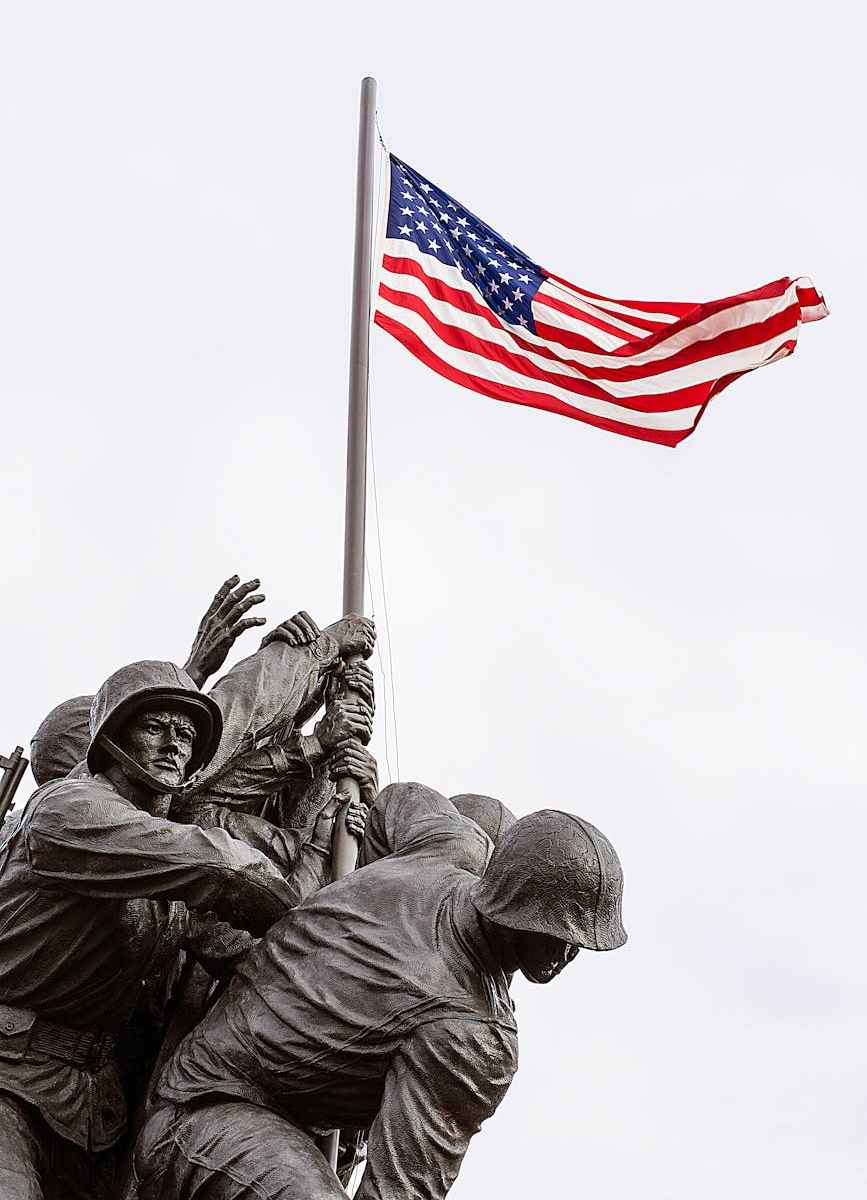
Cover image via Plexels Free Images

 The Angry Staff Officer