
In the future, will wars be fought with non-conventional means? Will engines designed for bringing people together and opening lines of communication be used for destruction instead? Some might say that they already are - all we need to do now is to militarize them. Like this. “Sir, we’ve got enemy movement, possibly up to …
Why 1866 Set the Stage for Two World Wars
When some search for the roots of the First World War, there is a tendency to look towards the Balkans. After all, it was the assassination of the Archduke Franz Ferdinand of the Austro-Hungarian Empire in Sarajevo in 1914 that precipitated the kick-off of the greatest and most deadly bar-brawl in the history of the …
Continue reading "Why 1866 Set the Stage for Two World Wars"
Use of Force: 7 U.S. Military Actions You’ve Never Heard Of
Last week, the U.S. hit a Syrian airfield with 59 cruise missiles as retaliation for Syria’s alleged use of banned nerve agents on its own civilian population. Some have questioned whether or not the strike went too far or perhaps did not go far enough. Many - including myself - equated it to the Clinton …
Continue reading "Use of Force: 7 U.S. Military Actions You’ve Never Heard Of"
” Look! Here are the Americans!” The U.S. in World War I and Popular Memory
One hundred years ago this week, the United States entered World War I. “Too late to make a difference!” say some, often British or Commonwealth. “Should never have joined it at all,” say others, usually non-interventionist Americans. “World war what?” say many, usually all other Americans. “Thank you,” say a great many, almost always French. No …
Continue reading "” Look! Here are the Americans!” The U.S. in World War I and Popular Memory"
Star Wars by Other Means: Rogue One and Foreign Policy
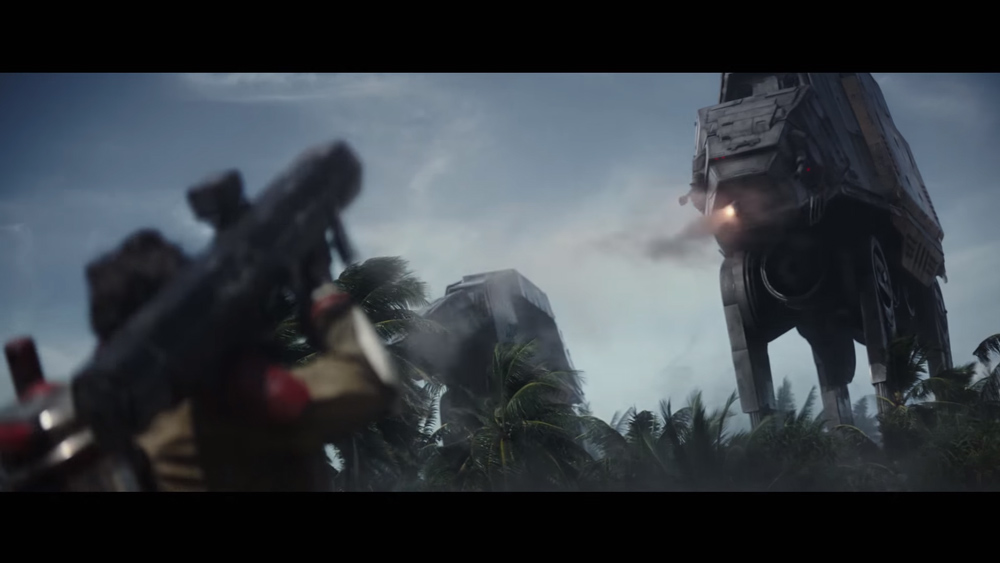
Carl von Clausewitz famously wrote, “War is the continuation of politics by other means.” In today’s climate, it would be truer to say, “Star Wars is the representation of politics by other means.” From the echoes of Vietnam in A New Hope and company in the 1970s and ‘80s to the heavy-handed anti-imperialistic tones of …
Continue reading "Star Wars by Other Means: Rogue One and Foreign Policy"
A Short History of the Militia in the United States
The idea of a militia - that is, groups of armed citizens that enter military service in time of need - has a long and contentious history in the United States. The idea of what constitutes the militia under the Constitution is has stirred up a lot of debate these past few years, and was …
Continue reading "A Short History of the Militia in the United States"
The U.S. Military Photo Scandal: Whose Fault is It?
In case you haven’t noticed, sexual harassment and assault in the military is back in the news. This time, Marines and retired Marines have been caught sharing nude photos of women Marines inside a closed Facebook group. These photos were either shared or taken without consent. But that was merely the beginning. Digging deeper, investigators …
Continue reading "The U.S. Military Photo Scandal: Whose Fault is It?"
No More Task Force Rogue Ones: A Tactical Analysis of the Raid on Scarif
Disclaimer: this should not be read as not wanting more Rogue One-type movies; we need more Star Wars films like this. Also: SPOILERS. There's a common phrase that you're apt to hear in discussions on Army readiness: "No more Task Force Smiths." For reference, Task Force Smith was a rapidly cobbled together unit of infantry and artillery …
Continue reading "No More Task Force Rogue Ones: A Tactical Analysis of the Raid on Scarif"
Warfighter: Toad Hall
How Wind in the Willows can teach us about small unit actions in warfare. That sound? Oh, that’s just the clunking of heads hitting desks, as people react to their beloved childhood book being brought under the scrutiny of the military microscope. But really, we’d be doing an injustice to that mighty asymmetric warfighter, the …
War as a Human Endeavor: How do we train for that?
“War is a human endeavor—a fundamentally human clash of wills often fought among populations. It is not a mechanical process that can be controlled precisely, or even mostly, by machines, statistics, or laws that cover operations in carefully controlled and predictable environments. Fundamentally, all war is about changing human behavior. It is both a contest …
Continue reading "War as a Human Endeavor: How do we train for that?"


You must be logged in to post a comment.