

Dear PBS,
So, I don’t say this enough, but I really doggone love you. You launched my passion for history. You made me read more books. And you made me tolerate and almost become interested in science. Which, as my mother could tell you, is a real feat. And you did this at the cost of zero money for a poor kid from rural Ohio.
In my family, we didn’t grow up with much money. This an understatement, but I don’t want to belabor that point; suffice to say: we were very financially poor. Doing something like paying for cable was not a thing I could conceive of until college (and then only because it was a 6-month deal, which caused my college house’s collective grades to drop by 5-percentage points due to our discovery of 1980s action movies). We didn’t even have a TV until I was about eight, and then only because of a generous deed that sparked a fire which has yet to die.
A package arrived to our house one day, which turned out to be a TV-VCR combo (an elegant weapon for a more civilized age). I think the TV screen was about 14″ by 14″ but that didn’t matter; it was a TV. It contained two videotapes and a note. The note was from my uncle, who had sent the whole because, as he said, we needed to see what was on the tapes. He had taped a recent PBS program, and we could read on the handwritten label in his scientific scrawl, “PBS – Ken Burns – Civil War.” It is not too much to say that the trajectory of my life changed that day.
As the screen crackled to life, I saw for the first time the preamble that shaped so much future learning: “Made possible by viewers like you.” Then came the words of Oliver Wendell Holmes, jr.: “We have shared the incommunicable experience of war; we have felt, we still feel, the passion of life to its top. In our youths, our hearts were touched with fire,” followed by the never-to-be-forgotten Ashoken Farewell. I had no idea what I was watching, I didn’t know who those historians were, but I knew that whatever this was, I wanted to do it. My thus-far lifelong obsession with history had begun. It shows no sign of abating. And it was all due to PBS. Well, and my uncle, too.
More recorded video-tapes followed: Baseball. Jazz. The Brooklyn Bridge. The West. And on the gifted TV, Channel 13 became a regular friend – even if you did have to move the antenna to just the right spot to get it to come in clearly. We watched American Experience, the News Hour, and so many others. I fell in love with documentary television. I also fell in love with a talkative rat terrier and a gangly scientist.
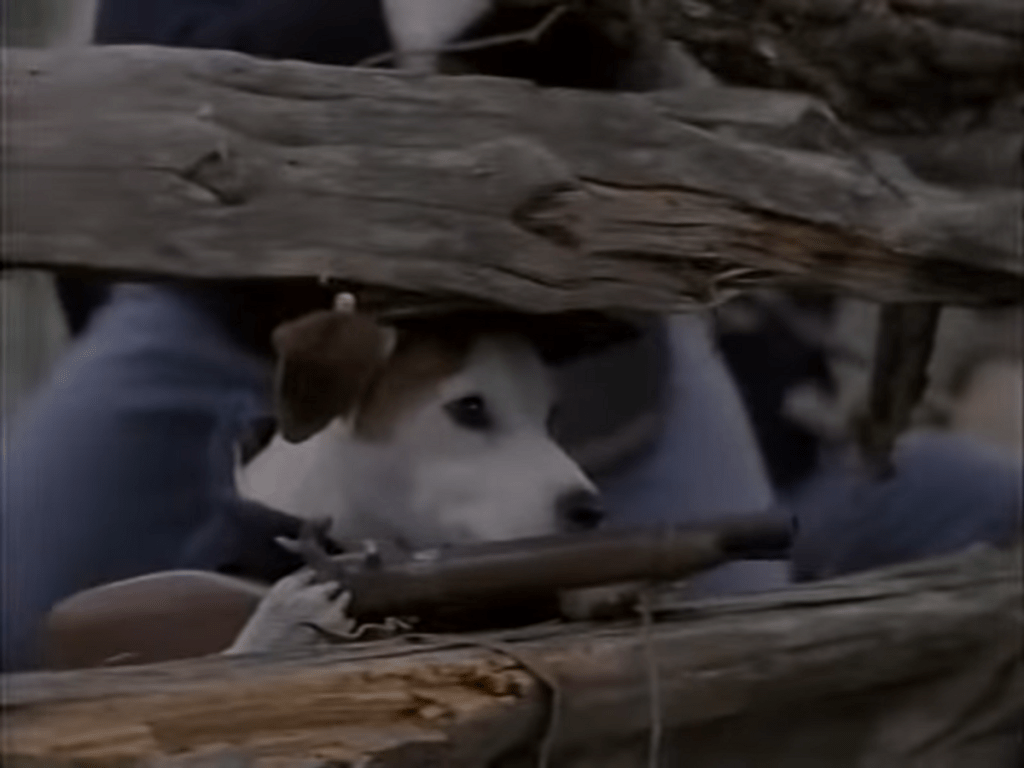
Where PBS documentaries jump-started my obsessive compulsion for military history (I graduated from the kids history section at the library and hit up the adult history section around the age of ten, much to the confusion of many a librarian), Wishbone and Bill Nye the Science Guy sparked joy and interest. Following that wonderful dog through literature brought me to so many books I still cherish: The Three Musketeers, Treasure Island, and The Red Badge of Courage. Am I upset that Wishbone’s rendition of The Count of Monte Cristo remains superior to the actual book? Heck no. That one is on Dumas.
Wishbone encouraged my already well-established liberal arts trend, but Bill Nye somehow got my right-sided brain interested in how the world worked. I am fairly certain that my understanding of the concept of lift is still informed by that show. It broke through where no textbook could, which is a testament to the power of television. And it did all this for free. If PBS was cable, I never would have had this experience.
While I can’t say that I was raised on PBS, it did play a remarkably important role in shaping my future interests. It did something else, too: it made me unironically love my country. All those American Experience and Ken Burns documentaries showed me so much about the potential of the United States, of the possibilities, of the promise held within our Republic. That is a difficult thing to do to a ’90s kid, I believe. And what is more remarkable, it did so while being honest about our flaws. As I’ve grown older, I have perceived the flaws more deeply and felt the raw indignation at so much of our past – but indignation backed by love of what should be. The work of PBS cultivated in me a sense of our potential as a nation and of “how great a debt we owe to those who went before us through the blood and suffering of the Revolution,” as the tear-jerking Sullivan Ballou letter from The Civil War puts it. And not just the Revolution, and not just our wars, but all those struggles aimed at making the words of the Declaration of Independence hold true for all Americans. The labor strikes, the marches and hunger strikes for women’s suffrage, the fight against slavery, the battle for civil rights, the list goes on and on. It is not a debt I take lightly, and I think I knew that before the idea was fully formed in my brain.
So, what did all this “indoctrination” from a supposedly left-leaning organization cause me to do? Well, I joined the Army and became a historian. You know, perfectly logical. But I suppose that’s what happens when you spark curiosity, a hunger for learning, a desire to give back to your country, and a genuine sense of patriotism. A patriotism that does not say, “My country, right or wrong,” but one that cries out, “My country, may we keep her in the right.” Or, as a much more eloquent person said, “with firmness in the right as God gives us to see the right.” And isn’t that just what John Adams meant when he wrote in 1776 that public virtue must drive the new American experiment? In fact, what worried Adams was that “commerce,” the love of money above all else, would drive the private interest to overturn the public good:
“Men must be ready, they must pride themselves, and be happy to sacrifice their private Pleasures, Passions and Interests, nay, their private Friendships and dearest Connections, when they stand in Competition with the Rights of Society…The Spirit of Commerce…it is much to be feared is incompatible with that purity of Heart and Greatness of soul which is necessary for an happy Republic.”
There is something tragic that it is the idea of private financial greed that might even now be overturning something so beneficial to the public good. The Corporation for Public Broadcasting costs the average American about $1.60 per year. Where does that money go? It probably doesn’t do much for the person who is paying a lot of taxes, but it damn sure means the world – sometimes, literally – to those who make so little that they don’t pay taxes. Surely this is what Adams meant when he referred to supporting the public good over the private pecuniary interests? But here we are.
PBS, you might be wondering why I’m saying all this to you. Well, if I learned anything from you, it is to be an optimist. Well, except about going to an English manor house for vacation and expecting to not get murdered. Masterpiece Mystery, Poirot, and Miss Marple took care of that concern. But in everything else, I am reminded of the power of words and the great American spirit for hope. As FDR said, “We have always held to the hope, the belief, the conviction, that there is a better life, a better world, beyond the horizon.”
It is my hope that someone will read this and perhaps think of that child who has less than they do, a child who wants to learn but doesn’t have the resources. Or a child like I was, with a physical poverty but hungering for a wealth of learning. All that potential, in people all across the country, young and old, just waiting to receive the joyous spark of learning. And maybe that person will change their mind. Or reconsider their vote. Or talk to a friend. Or call their representative. You know, that ol’ democratic process. Which is another thing I learned from PBS.
If this is indeed the end, old Corporation for Public Broadcasting friend, I don’t know how to say thank you enough. Perhaps it’s just a smile and wave from Mr. Rogers, or a last haunting musical interlude from a documentary. But the difference you made in this nation – and in my life – will not be forgotten.
From viewers like us, thank you.
PS. This post would have to be twice as long for NPR, because you can’t just gloss over a lifetime of Performance Today, Morning Edition, A Prairie Home Companion, Car Talk, Marketplace, Wait, Wait, Don’t Tell Me…
The opinions reflected here are that of the author and do not represent those of the Department of Defense.

 The Angry Staff Officer
You must be logged in to post a comment.