
There’s been quite a lot of sound and fury from the Department of War (née Defense) about “warriors wanted,” “only warriors need apply,” “standing up for our warriors,” and other such highly repetitive and fairly monotonous phrases. The long and short of it is that certain people would like the American public and outside observers to know that the United States military establishment has abandoned its outdated and beta citizen-soldier moniker and is now made up of professional alpha (male) warriors. Leaving behind just how silly that statement is – and how it dog whistles for a special warrior caste that would stand ahead of the average citizen (think Prussia 1914) – it misses a really crucial point: America’s true strength is in its citizen-soldiery.
We’ve become very accustomed to the post-1973 All-Volunteer Force (AVF) where we said goodbye to nearly 200 years of conscription and mass volunteer service in war in favor of a large standing military in time of peace. While I don’t necessarily agree with the idea of mandatory military service, and as a military officer probably would not want to deal with the downstream affects of the draft, mandatory service did bring real benefits. The decision to end it has consequences which are still playing out in real time around us, but several are already apparent. It has changed how we think about military service, it ended a tradition of innovation in the military, and it has driven us closer to forming a military caste.
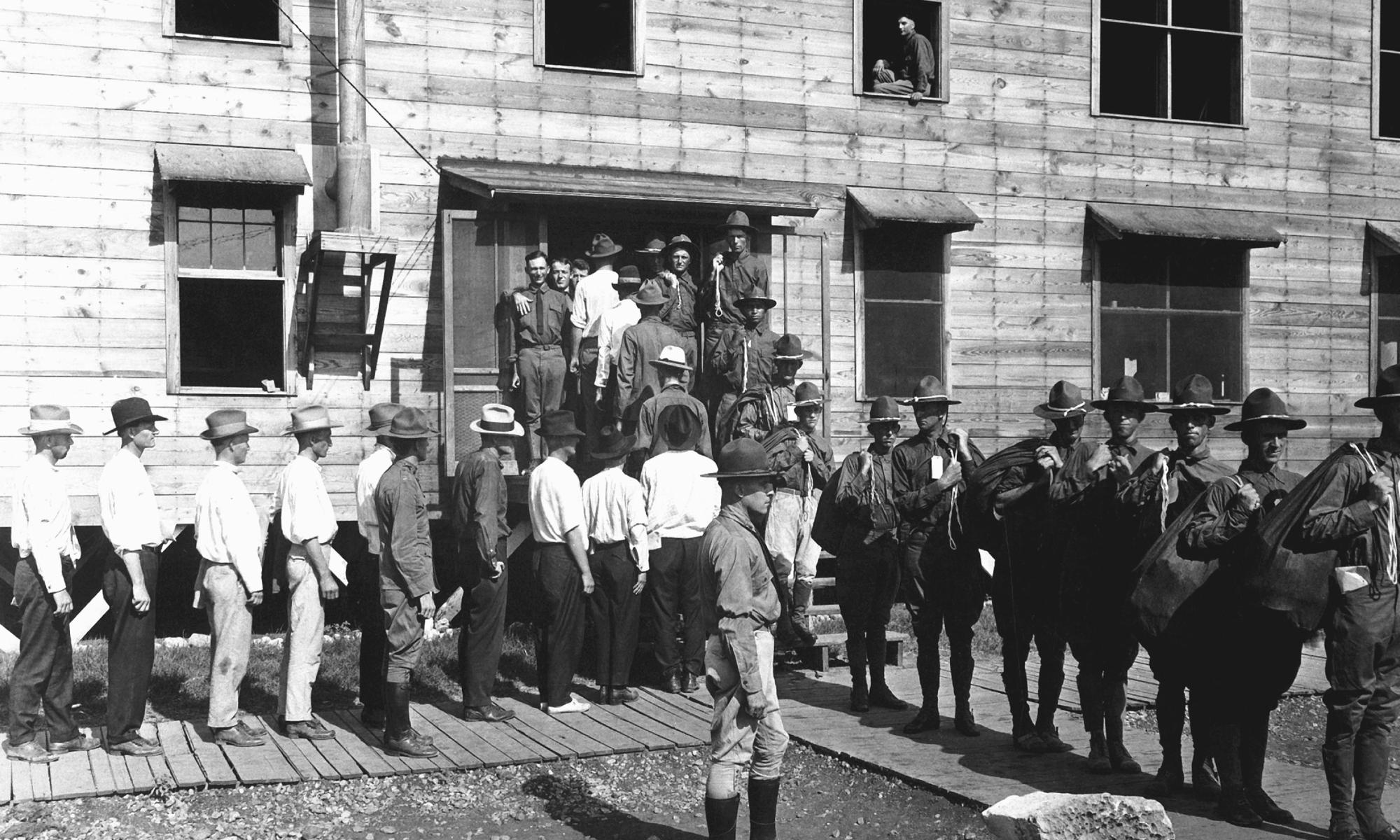
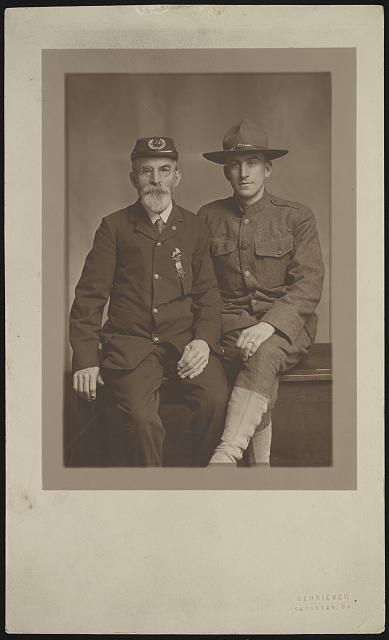
Moving to an All Volunteer Force changed the entire paradigm of how Americans think of military service. Think back to your parents, grandparents, great-grandparents, etc.; there are most likely graying photographs on your walls depicting some – or many- family members in uniform. Not to cast aspersions on them, but most of them did not likely volunteer for service in WWI or WWII. The greatest generation and its parent Great War generation were mostly drafted. Prior to that, the Army in time of war was made up of volunteer state units that largely reflected American society at the time. This gave us an enormous shared, lived, and passed down collective experience. This benefited us not only culturally, but politically. Since veterans came from all walks of life, they had greater representation in government. Veterans forming major voting blocs gave the U.S. the first types of benefits that provided higher education and affordable housing through the G.I. Bill. Collective service benefited American society as a whole.
Military service also gave American people a greater political understanding and buy-in regarding national defense decisions. War, according to some dead German, is politics. Since more people served and since there was an understanding that war meant that everyone shared the burden, the electorate had a greater say in when and where the nation would go to war. Americans exercised this understanding at the ballot box and shaped generations of political decisions.
Now, rather than being a shared communal experience in times of national conflict, military service has been practiced only by a select few. “You are less than 1% of the population that is willing to serve,” says every Veterans Day speaker to uniformed audiences, as if this is something to be proud of rather than a warning alarm. This has erased general understanding of military service, cut the U.S. military off from the average citizen, and disconnected the person in the street from overall national security decision making.
At a practical level, the AVF decision effectively ended 200 years of a small standing army backed by an expansible force of citizen-soldiers that were not hidebound by Regular Army thinking, were on average more intelligent than Regulars, and brought innate skills from civilian life which increased innovation. This provided the U.S. Army with a combat edge before it even got to the battlefield. Innovation comes from a citizen-soldier military. A New Jersey National Guardsman came up with the device that beat the hedgerows in Normandy after the landings – which is saying something, if New Jersey can actually have ideas (author goes into hiding to avoid the inevitable mob hit).
Some of the greatest moments in the Army’s history are brought to us by individuals whose occupation was something entirely secondary to their temporary role as soldier. The Continental Army in 1776 owed its entire existence to its boatmen-turned-soldiers, like those in Glover’s Marblehead Regiment who manned the sweeps to float Washington’s army to safety across the East River. Washington’s army should’ve been destroyed on the Brooklyn side but for the skills of these New England boatmen who got the army to (relative) safety in Manhattan.
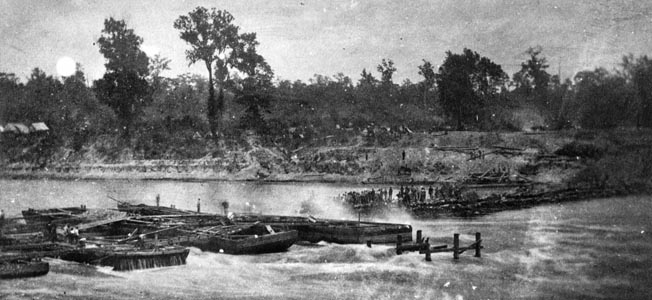
Innovation comes from those not hidebound to Regular Army thinking. During the Petersburg Campaign of 1864-1865, the coal miners of the 48th Pennsylvania Volunteer Infantry proposed to dig a mine under Confederate works and blow a giant hole in the line to break the stalemate. The coal miners were as good as their word, and had not the follow-on attack been disorganized and disrupted (by Regular Army officers, I would add) the siege might have ended in July 1864. During the Red River Campaign of 1864, citizen-soldiers saved the Navy flotilla from running aground and capture. The river had fallen at such a rapid rate that the gunboats were in danger of losing all way and running aground. A New York infantry officer was an engineer in civilian life and came forward with an offer to build a lock and damn to float the gunboats out of danger, as long as woodsman could be found. Luckily, the 30th Maine Volunteer Infantry Regiment proved to be full of men with experience in logging. Combining their skills, the northeasterners built a dam with locks and floated the Navy gunboats to safety.
Mass service provides a higher intellect of soldier and encourages investment in education. As historian Brian Linn points out in his phenomenal work Elvis’s Army: Cold War GIs and the Atomic Battlefield, as the Army grew more technologically sophisticated it relied more and more on better-educated draftees. It spurred greater education investment in the American South in the 1950s as the military preferred draftees from the Northeast, Midwest, and California that were better educated than those from the South.
Probably the most significant thing collective service brought our nation was the idea that military service was a shared duty, and that if the nation went to war then all citizens collectively participated in the war. This did two things: created more opportunities for the United States to live up to its Declaratory mantra that “all men are created equal” and prevented development of a military class system.
Collective service drove greater social change in the United States. African-Americans pushed hard for representative military service through the Civil War and World Wars as a way of demonstrating their right to equal treatment under the law. “Once let the black man get upon his person the brass letters U.S.” wrote Frederick Douglass in 1863, “let him get an eagle on his button, and a musket on his shoulder, and bullets in his pocket, and there is no power on the earth or under the earth which can deny that he has earned the right of citizenship in the United States.” Women drove hard for military service through the 20th century for precisely the same reasons. Shared military experience drove greater social equality in civilian life.
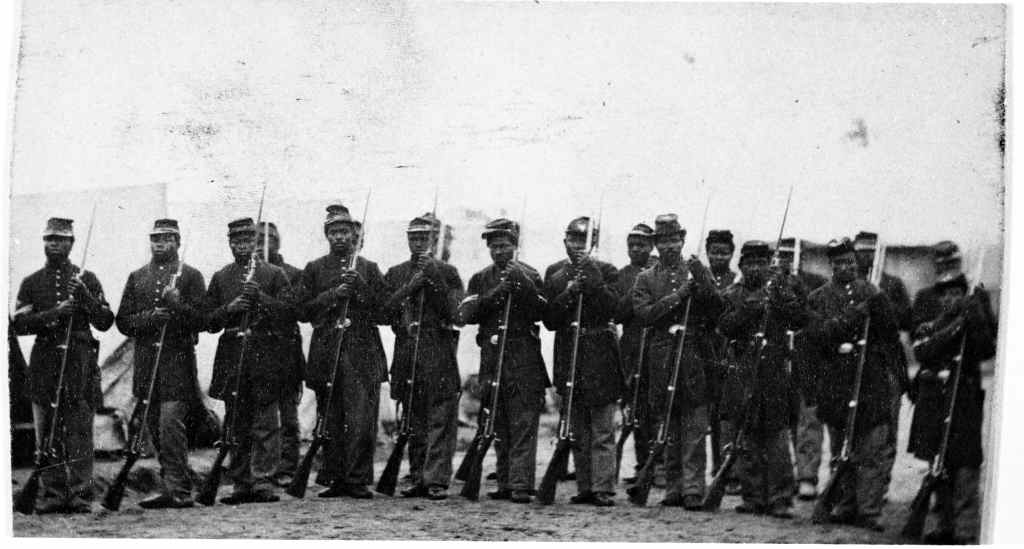
Second, collective service prevented the development of a military class system. This worried the founding generation and the generations which followed to the point that the Regular Army was never allowed to grow larger than 100,000 well up to the First World War. The first military veterans organization, the Society of Cincinnatus formed by Continental Army officers after the Revolution, was seen as dangerous since it excluded enlisted service members. Military class systems have always been associated with despotism and military states. Shared military service ensured that the American Republic would not devolve into a Prussian-style state, where governance and the social order was driven by a small group of military men. The Prussian military class drove Germany into multiple wars that devastated the world and Germany itself. It is not a model worthy of emulation.
Without collective service, the United States is vulnerable to losing its innovative edge, comes dangerously close to creating a “warrior” class, and encourages a society where the average citizen is disconnected from foreign policy and national defense decision making. Citizen soldiers, united by a shared background, win wars. When the nation goes to war, it has a higher chance of success when everyone participates. We risk losing the soul of the American experiment when we leave the citizen soldier tradition behind.
This post represents the author’s own views and does not reflect those of the Department of Defense. If you’ve enjoyed what you just read, please share via social media, smoke signals, carrier pigeons, pony express riders, or your own particular system.


You must be logged in to post a comment.